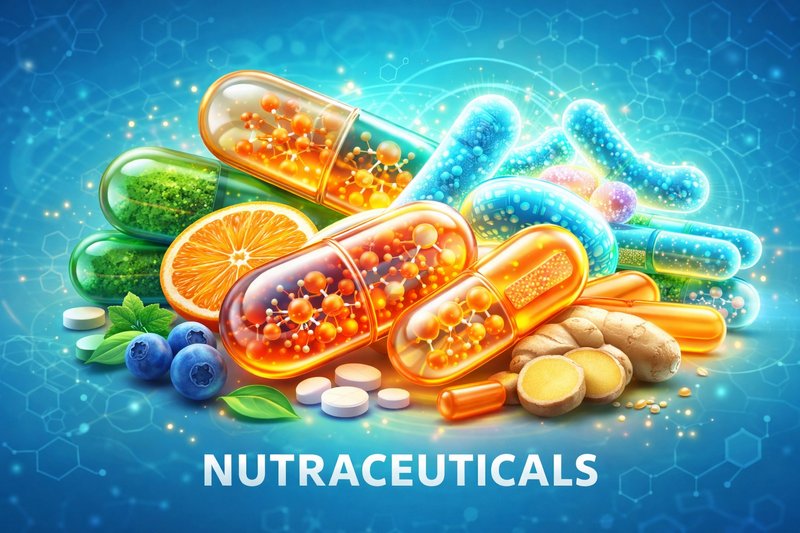
In today’s fast-paced world, the boundary between food and medicine is becoming increasingly blurred. One of the most exciting developments in modern healthcare is the rise of nutraceuticals, a term that combines “nutrition” and “pharmaceutical.” These bioactive compounds, derived from food sources, are designed not only to provide basic nutrition but also to offer therapeutic and preventive health benefits.
As lifestyle-related diseases such as diabetes, obesity, and cardiovascular disorders continue to rise, nutraceuticals have emerged as a promising solution for maintaining health and preventing illness.
What Are Nutraceuticals?
Nutraceuticals are defined as food or parts of food that provide medical or health benefits, including the prevention and treatment of diseases.
They include a wide range of products such as:
- Dietary supplements (vitamins, minerals)
- Functional foods (fortified foods, probiotics)
- Herbal products (plant-based extracts)
These substances contain bioactive compounds like antioxidants, polyphenols, fatty acids, and probiotics that contribute to improved physiological function and overall well-being.
Types of Nutraceuticals
Nutraceuticals can be broadly classified into:
1. Traditional Nutraceuticals
These are naturally occurring foods with health benefits:
- Fruits and vegetables
- Whole grains
- Herbs and spices
2. Non-Traditional Nutraceuticals
These are modified or fortified foods:
- Enriched cereals
- Functional beverages
- Genetically modified foods
3. Dietary Supplements
- Vitamins (A, C, D, E)
- Minerals (Calcium, Zinc, Iron)
- Omega-3 fatty acids
Such classifications highlight the diverse sources and applications of nutraceuticals in healthcare.
Role of Nutraceuticals in Human Health
1. Disease Prevention
Nutraceuticals play a vital role in preventing chronic diseases such as:
- Cardiovascular diseases
- Diabetes
- Cancer
Their antioxidant and anti-inflammatory properties help combat oxidative stress and reduce disease risk.
2. Health Promotion
These compounds enhance overall health by:
- Boosting immunity
- Improving digestion
- Supporting metabolic functions
For example, probiotics improve gut health, while omega-3 fatty acids support heart function.
3. Anti-Aging Effects
Nutraceuticals slow down the aging process by:
- Reducing cellular damage
- Enhancing skin health
- Improving cognitive function
They help increase life expectancy and maintain quality of life.
4. Support in Disease Management
While not a replacement for medicines, nutraceuticals act as adjunct therapy: Reduce side effects of treatments (e.g., chemotherapy)
Improve recovery and healing
They are increasingly used alongside conventional therapies.
5. Role in Lifestyle Disorders
Modern lifestyles have led to increased health issues like obesity and hypertension. Nutraceuticals help in:
- Weight management
- Cholesterol control
- Blood sugar regulation
Thus, they are becoming essential tools in managing lifestyle diseases.
Advantages of Nutraceuticals
- Natural origin with fewer side effects
- Preventive approach rather than curative
- Holistic health benefits
- Increasing consumer acceptance
Nutraceuticals are gaining popularity because they offer a safer alternative compared to synthetic drugs in certain conditions.
Limitations and Challenges
Despite their benefits, nutraceuticals face several challenges:
- Lack of strict regulatory frameworks
- Limited clinical evidence for some products
- Possible interactions with drugs
- Variability in quality and dosage
These factors highlight the need for more research and regulation.
Future Prospects
The future of nutraceuticals looks highly promising due to:
- Advances in biotechnology and nanotechnology
- Growing awareness of preventive healthcare
- Increasing demand for natural products
Nutraceuticals are expected to play a crucial role in personalized medicine and functional nutrition in the coming years.
Conclusion
Nutraceuticals represent a revolutionary shift in healthcare from treatment to prevention. By bridging the gap between food and medicine, they offer a holistic approach to maintaining health and combating diseases. Although they cannot replace pharmaceuticals entirely, their role as supportive and preventive agents is undeniable.
As science continues to evolve, nutraceuticals are poised to become a cornerstone of modern healthcare, empowering individuals to take control of their health naturally and effectively.
References
1. Puri V. et al. A Comprehensive Review on Nutraceuticals: Therapy Support and Formulation Challenges, Nutrients, 2022.
2. Das L. et al. Role of Nutraceuticals in Human Health, Journal of Food Science, 2011.
3. Prajapati R.N. et al. Role, Scope, Health Benefits of Nutraceuticals, CRPS, 2020.
4. Nutraceuticals: Transformation of Conventional Foods into Health Promoters,
5. Sharma A. et al. Therapeutic Benefits and Health Implications of Nutraceuticals, 2022.
6. Somthane P. et al. Nutraceuticals and Health Benefits Review, 2023.